



Newsletter Subscribe
Enter your email address below and subscribe to our newsletter

 ByMrRobo
Imagine a toy car. You press a button, and it moves forward. It follows a simple rule: go straight.
Now imagine the toy car thinking.
It sees a wall and turns away. It remembers the fastest path across the room. Tomorrow, it drives even better because it learned from yesterday.
That is the difference between traditional robots and AI-powered robots.
Traditional robots follow fixed instructions written by engineers. AI robots learn from data, experience, and feedback. They observe their environment, make decisions, and improve over time.
This shift—from rigid automation to intelligent machines—is what engineers call the rise of AI robotics.
And it is transforming nearly every industry on Earth.
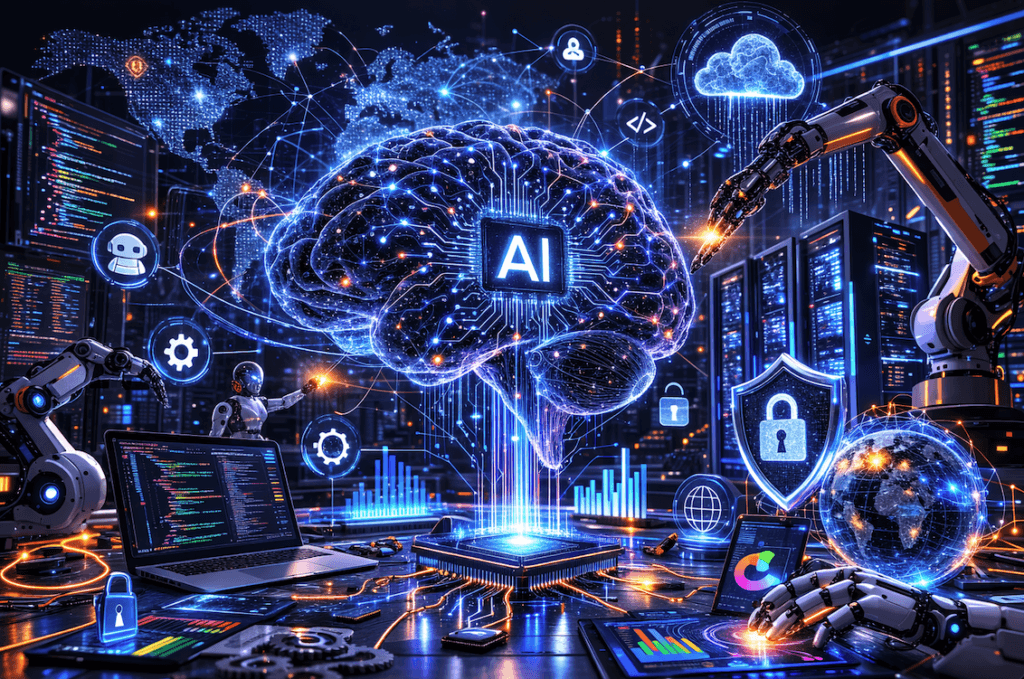
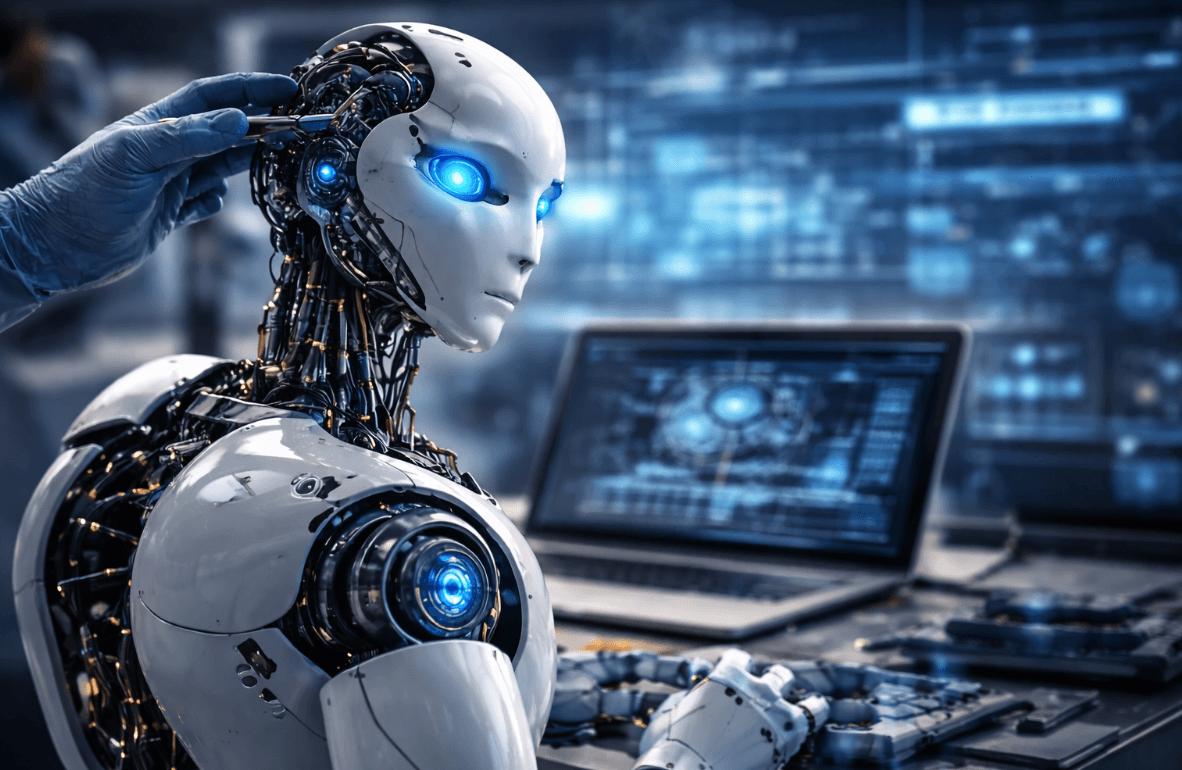
AI robotics combines artificial intelligence with robotic systems so machines can perceive, reason, and act.
Traditional industrial robots operate like extremely precise tools. They repeat the same task thousands of times with near-perfect accuracy. But they struggle when something unexpected happens.
AI robotics changes that.
By integrating sensors, machine learning algorithms, and control systems, robots can interpret complex environments and adjust their behavior dynamically.
In simple terms, AI robotics allows machines to see, think, and act.
Sensors collect environmental information. AI algorithms analyze patterns and make decisions. Actuators convert those decisions into physical movement.
The result is a new class of machines capable of autonomous operation.
Behind every intelligent robot lies a sophisticated engineering architecture.
At the first level is the perception layer. Robots must understand their environment before they can act. Cameras, LiDAR sensors, radar systems, and infrared detectors gather continuous streams of data about objects, motion, and spatial relationships.
This data feeds into computer vision models and neural networks. These systems identify obstacles, detect objects, and map the surrounding environment.
Once the robot understands its environment, it enters the decision-making layer. Machine learning models evaluate possible actions and determine the optimal response. Algorithms such as reinforcement learning and path-planning models help robots choose efficient and safe behaviors.
After the decision is made, the control systems layer executes it.
Industrial Control Systems coordinate motors and actuators through precise feedback loops. Engineers often use PID controllers (Proportional–Integral–Derivative) to maintain stability and accuracy. These systems constantly monitor position, velocity, and force to ensure smooth movement.
Finally, actuators transform digital instructions into mechanical motion. Electric motors, hydraulic systems, and pneumatic mechanisms allow robots to interact with the physical world.
Together, these layers create machines capable of intelligent, adaptive behavior.
The rapid growth of AI robotics is driven by several technological breakthroughs.
First, computing power has become dramatically cheaper. Modern GPUs and specialized AI chips allow robots to process enormous volumes of sensor data in real time.
Second, advances in machine learning have enabled robots to recognize patterns and learn from experience. Deep neural networks can analyze visual scenes, predict system behavior, and continuously improve performance.
Third, sensor technology has evolved rapidly. High-quality cameras, LiDAR systems, and environmental sensors that once cost thousands of dollars are now widely affordable.
Finally, the rise of Industry 4.0 has created a digital ecosystem where robotics, cloud computing, and industrial IoT systems operate together. These cyber-physical systems connect machines, data, and analytics into intelligent production environments.
The result is a global acceleration in robotics innovation.
AI robotics is already transforming critical sectors.
In manufacturing, collaborative robots—known as cobots—work alongside human operators on assembly lines. These systems handle repetitive tasks while humans focus on complex problem-solving and quality control.
In healthcare, AI-powered surgical robots enable highly precise operations. Surgeons can perform delicate procedures through minimally invasive techniques, improving patient outcomes and recovery times.
Logistics companies deploy autonomous warehouse robots to move goods efficiently through distribution centers. These machines sort inventory, transport packages, and optimize order fulfillment processes.
Agriculture is also being reshaped by robotics. Autonomous drones and robotic harvesters monitor crops, detect disease, and improve agricultural productivity through precision farming techniques.
Each of these applications demonstrates how intelligent machines can enhance human capabilities.
Despite rapid progress, several misconceptions still surround robotics.
One common myth is that robots will replace all human jobs. In reality, robots primarily automate repetitive or hazardous tasks. At the same time, they create new opportunities in engineering, robotics maintenance, AI development, and automation consulting.
Another misconception is that modern robots are completely autonomous. In most industrial environments, robotics systems still operate under human supervision. Engineers design human-in-the-loop systems to ensure safety, reliability, and ethical accountability.
Finally, many people believe robotics is only accessible to large corporations. Today, open-source robotics platforms, cloud AI tools, and affordable hardware allow small teams and independent engineers to build sophisticated robotic systems.
The barrier to innovation has never been lower.
The next decade will see dramatic advances in robotic intelligence.
One emerging area is cognitive robotics, where machines combine deep learning with symbolic reasoning to understand context and intent. These systems aim to make robots capable of higher-level problem solving.
Another major trend is human–robot collaboration. Future robots will be designed specifically to work safely alongside humans in shared environments.
Edge AI robotics is also gaining momentum. Instead of sending data to remote cloud servers, robots will process information locally. This reduces latency, improves reliability, and strengthens cybersecurity.
Finally, robotics-as-a-service business models are lowering the cost of adoption. Companies can deploy robotic systems through subscription models rather than large capital investments.
These trends will make intelligent machines more accessible and more capable than ever before.
From an engineering perspective, the greatest challenge is not building robots themselves. The real difficulty lies in integrating robotic systems with existing industrial infrastructure.
When robots connect to factory networks, they become part of larger digital ecosystems that include Industrial Control Systems, enterprise software, and cloud analytics platforms.
This integration introduces new cybersecurity risks and operational complexities.
Engineers must therefore understand not only robotics and AI, but also network architecture, operational technology security, and system reliability.
The future robotics engineer will need expertise across multiple disciplines.
AI robotics represents one of the most important technological transformations of the modern era.
Machines are evolving from rigid automation tools into adaptive, collaborative systems capable of learning and decision-making.
This transformation will redefine how factories operate, how goods are transported, and how humans interact with machines.
For engineers, researchers, and entrepreneurs, the rise of AI robotics presents an unprecedented opportunity.
The future will not belong to robots alone.
It will belong to the people who understand how to build them.